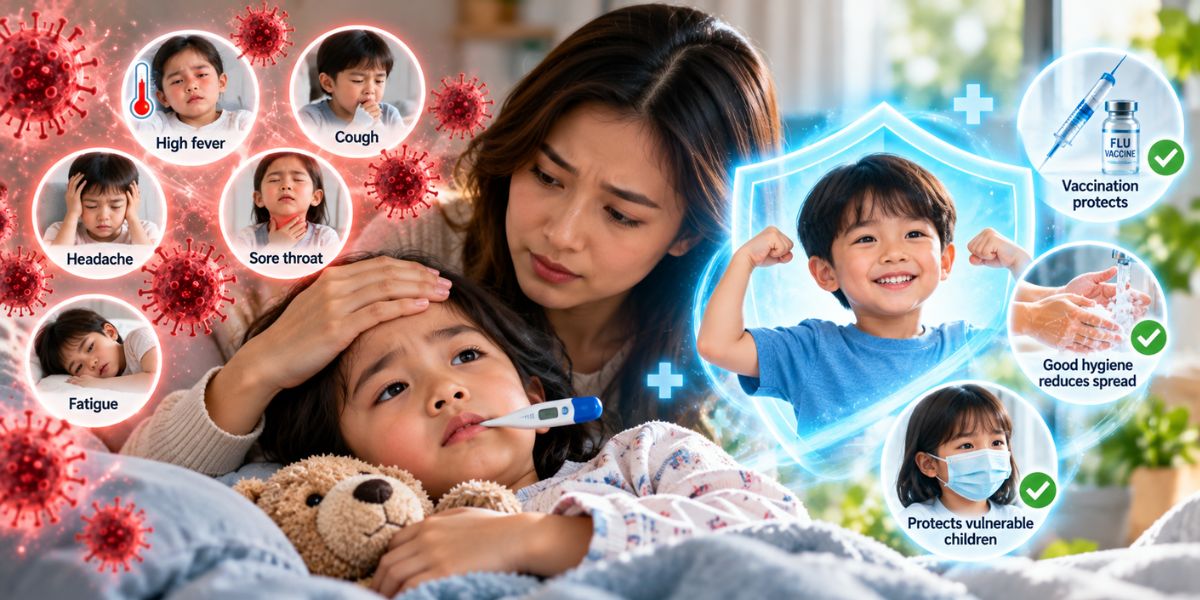
Influenza is often considered a common seasonal illness, but for children, the flu can sometimes become much more serious than parents expect.
While many children recover within several days, others develop complications that require medical attention or hospitalization. Young children, particularly babies and toddlers, are more vulnerable to severe influenza because of their developing immune systems and smaller respiratory airways.
Influenza is not simply a common cold. It is a contagious viral infection that can cause pneumonia, dehydration, breathing difficulties, and other potentially life-threatening complications in children.
According to the Centers for Disease Control and Prevention (CDC), children younger than five years old are at increased risk of serious influenza complications, with the greatest concern among children younger than two.
Even healthy school-aged children can occasionally become seriously ill.
Understanding how influenza affects children, recognizing early warning signs, and taking appropriate preventive measures can help parents protect their children's health.
This guide explains why influenza can be dangerous for babies, toddlers, and older children, the complications parents should recognize, and the steps families can take to reduce infection risks.
What Is Influenza in Children?
Influenza, commonly called the flu, is an infectious respiratory illness caused by influenza viruses.
The infection primarily affects the nose, throat, and lungs.
Influenza A and influenza B viruses are responsible for seasonal flu epidemics in humans.
Children can become infected when they inhale respiratory particles containing influenza viruses or through certain other exposures involving infectious respiratory material.
Once infected, children may develop symptoms that range from mild respiratory discomfort to severe illness.
Common symptoms include fever, coughing, sore throat, runny nose, muscle aches, headaches, chills, and fatigue.
Unlike many adults, young children may also experience vomiting or diarrhea during influenza infection.
The severity of illness varies depending on the child's age, underlying health conditions, previous immunity, and other factors.
Why Is Influenza More Dangerous for Young Children?
Several factors make young children more vulnerable to serious influenza illness.
1. Their Immune Systems Are Still Developing
The immune system develops and changes throughout childhood.
Young children may have limited previous exposure to influenza viruses, which means they may lack protective immunity against certain circulating strains.
Although children's immune systems can respond effectively to infections, unfamiliar respiratory pathogens may sometimes produce substantial illness.
Influenza vaccination helps the immune system develop protection against selected influenza strains without requiring the child to experience the infection itself.
2. Babies and Toddlers Have Smaller Airways
Infants and toddlers have narrower respiratory passages than older children and adults.
When respiratory inflammation occurs, swelling and mucus can make breathing more difficult.
This can become particularly concerning when influenza causes lower respiratory tract complications.
Children who begin breathing rapidly, struggling to breathe, or showing visible chest retractions require prompt medical assessment.
3. Children Can Become Dehydrated More Easily
Influenza commonly causes fever, reduced appetite, and fatigue.
Some children also experience vomiting or diarrhea.
These symptoms may reduce fluid intake while increasing fluid loss.
Babies and young children are particularly vulnerable to dehydration because they have smaller fluid reserves and may be unable to communicate their needs clearly.
Signs of dehydration include reduced urination, dry mouth, absence of tears when crying, and unusual lethargy.
4. Certain Children Have Additional Medical Risks
Children with chronic health conditions may experience more severe influenza complications.
Conditions such as asthma, diabetes, heart disease, neurological disorders, and weakened immune function can increase vulnerability.
Influenza may also worsen an existing condition.
For example, a child with asthma may develop increased wheezing or an asthma attack during a flu infection.
5. Some Children Cannot Receive Influenza Vaccination Yet
Infants younger than six months are too young to receive currently recommended seasonal influenza vaccines.
This makes protection from family members, caregivers, and the surrounding environment especially important.
Vaccinating eligible household members, reducing exposure to sick individuals, and practicing respiratory hygiene can help protect infants who cannot yet be vaccinated.
Which Children Are Most at Risk of Severe Influenza?
Although influenza can affect children of any age, some groups have a higher risk of serious complications.
| Group | Why Risk May Be Higher |
|---|---|
| Babies younger than 6 months | Very young age and inability to receive influenza vaccination |
| Children younger than 2 years | Higher rates of severe flu complications |
| Children younger than 5 years | Increased risk compared with older children |
| Children with asthma | Flu can worsen breathing problems |
| Children with diabetes | Infection may complicate blood sugar management |
| Children with heart or lung disease | Reduced ability to tolerate serious respiratory illness |
| Immunocompromised children | May have more difficulty controlling infection |
| Children with certain neurological conditions | Increased risks involving breathing, swallowing, or airway protection |
Healthy children outside these groups can also experience serious influenza illness.
Parents should therefore monitor symptoms based on the child's actual condition rather than relying on age alone.
7 Serious Influenza Complications Parents Should Know
1. Pneumonia
Pneumonia is among the most concerning complications of influenza.
It occurs when the lungs become infected and inflamed, making normal breathing and oxygen exchange more difficult.
Influenza can cause viral pneumonia directly or contribute to secondary bacterial pneumonia.
Warning signs may include rapid breathing, difficulty breathing, chest discomfort, persistent or returning fever, and worsening fatigue.
Severe pneumonia may require hospitalization and oxygen support.
2. Dehydration
Fever, reduced drinking, vomiting, and diarrhea can cause children to lose more fluid than they consume.
Without adequate fluid replacement, dehydration can become serious.
Babies may show fewer wet diapers, while older children may urinate less frequently.
Other warning signs include dry lips, unusual sleepiness, and a lack of tears when crying.
Severe dehydration requires urgent medical care.
3. Ear Infections
Influenza can sometimes lead to secondary ear infections.
Children may experience ear pain, irritability, difficulty sleeping, or temporary hearing changes.
Younger children who cannot describe pain may repeatedly touch their ears or become unusually fussy.
A healthcare professional can determine whether treatment is necessary.
4. Worsening of Asthma
Children with asthma may experience more severe respiratory symptoms during influenza infection.
Viral inflammation can trigger wheezing, coughing, chest tightness, and breathing difficulties.
Parents should follow the child's existing asthma action plan and seek medical guidance if symptoms worsen.
Severe breathing difficulty requires emergency care.
5. Encephalopathy or Encephalitis
In rare cases, influenza is associated with serious neurological complications, including encephalopathy or encephalitis.
These conditions may affect brain function and cause symptoms such as confusion, seizures, altered consciousness, or unusual behavior.
Any child experiencing a seizure, severe confusion, or reduced responsiveness needs immediate medical attention.
6. Muscle Inflammation
Influenza can occasionally cause inflammation of muscle tissue, known as myositis.
Some children develop significant leg pain or refuse to walk during or shortly after a flu infection.
Rarely, severe muscle damage known as rhabdomyolysis can occur.
Severe muscle pain, inability to walk, marked weakness, or dark-colored urine requires urgent medical evaluation.
7. Respiratory Failure and Other Severe Complications
The most serious influenza cases may involve respiratory failure, sepsis, inflammation of the heart, or dysfunction involving multiple organs.
These complications are uncommon but potentially life-threatening.
The CDC recognizes pneumonia, dehydration, neurological complications, and worsening chronic medical conditions among the important risks of influenza in children.
Common Influenza Symptoms in Babies, Toddlers, and Older Children
Influenza symptoms can differ according to age.
Influenza Symptoms in Babies
Babies may be unable to communicate discomfort, making changes in behavior especially important.
Possible symptoms include fever, coughing, unusual fussiness, difficulty feeding, reduced activity, and changes in breathing.
Some infants may experience influenza without a prominent fever.
A fever in any infant younger than 12 weeks requires immediate medical evaluation.
Influenza Symptoms in Toddlers
Toddlers may develop sudden fever, coughing, runny nose, irritability, reduced appetite, vomiting, or fatigue.
Parents may notice that a normally active child suddenly becomes unusually quiet or refuses to play.
Because toddlers have limited ability to describe their symptoms, changes in drinking, urination, breathing, and responsiveness deserve close attention.
Influenza Symptoms in School-Aged Children
Older children may be better able to describe symptoms such as headaches, sore throat, muscle pain, chills, and exhaustion.
Some experience high fever and persistent coughing.
Others may have milder respiratory symptoms.
The absence of fever does not rule out influenza.
Influenza vs. the Common Cold in Children
Parents sometimes struggle to distinguish the flu from an ordinary cold.
| Symptom | Influenza | Common Cold |
|---|---|---|
| Onset | Often sudden | Usually gradual |
| Fever | Common, sometimes high | Less common or milder |
| Fatigue | Can be significant | Usually milder |
| Muscle aches | Common | Less pronounced |
| Runny nose | Possible | Very common |
| Cough | Common, sometimes severe | Usually milder |
| Serious complications | Possible | Generally less common |
These differences are only general patterns.
Other respiratory infections, including COVID-19 and RSV, can produce similar symptoms.
Medical testing may be necessary when identifying the cause will influence treatment decisions.
Emergency Warning Signs of Influenza in Children
Parents should seek immediate emergency medical care when a child develops symptoms suggesting serious influenza complications.
Seek Emergency Medical Attention
- Difficulty breathing or unusually rapid breathing.
- Blue or gray discoloration of the lips or face.
- The ribs pulling inward during breathing.
- Chest pain.
- Seizures or severe confusion.
- A child who is not alert or responding normally.
- Signs of severe dehydration, such as no urine for approximately eight hours, dry mouth, or no tears.
- Severe muscle pain or refusal to walk.
- Fever above 104°F (40°C) that is not controlled by fever-reducing medication.
- Any fever in a baby younger than 12 weeks.
- Symptoms that improve but then return with worsening fever or coughing.
These warning signs are consistent with CDC guidance on severe influenza illness.
Parents should not wait for every warning sign to appear before seeking help.
If a child appears seriously ill, has trouble breathing, or is difficult to wake, immediate medical care is essential.
How Is Influenza Treated in Children?
Treatment depends on the child's age, symptom severity, underlying medical conditions, and how long the illness has been present.
1. Prescription Antiviral Medication
Doctors may prescribe influenza antiviral medication to children with suspected or confirmed influenza.
Oseltamivir is one example of a prescription antiviral used in pediatric patients.
Antivirals work by limiting influenza virus replication.
They are generally most effective when started within the first two days of symptoms, although treatment can still provide benefits later in severe cases or high-risk children.
The CDC and American Academy of Pediatrics recommend prompt antiviral treatment for children with severe or progressive influenza and children at increased risk of complications.
Parents should never administer prescription antiviral medication without appropriate medical guidance.
2. Adequate Rest
Children with influenza often feel exhausted.
Rest allows them to conserve energy and recover from their illness.
Avoid strenuous physical activities and encourage age-appropriate sleep and quiet activities.
Children should not be pressured to return to school or sports while they are still significantly unwell.
3. Maintaining Hydration
Adequate fluids are particularly important for children experiencing fever, sweating, vomiting, or diarrhea.
Breastfeeding or formula feeding should continue for infants as appropriate.
Older children can be offered water, soup, or other suitable fluids.
Oral rehydration solutions may be recommended when significant fluid loss occurs.
Parents should monitor urine output and seek medical advice when children cannot drink adequately.
4. Managing Fever and Discomfort
Fever-reducing medications such as acetaminophen (paracetamol) or ibuprofen may help relieve discomfort in some children.
However, medication choice and dosage depend on the child's age, weight, and medical circumstances.
Ibuprofen should not be given to infants younger than six months unless specifically directed by a healthcare professional.
Aspirin should not be given to children or teenagers with suspected influenza because of its association with Reye's syndrome.
Always follow pediatric medical guidance and medication labeling.
5. Avoiding Unnecessary Antibiotics
Influenza is a viral infection.
Antibiotics do not treat the influenza virus itself.
They may be prescribed when a healthcare professional diagnoses an accompanying bacterial infection, such as certain cases of bacterial pneumonia or ear infection.
Using antibiotics unnecessarily can lead to side effects and contribute to antibiotic resistance.
How to Prevent Influenza in Children
Prevention is particularly important for babies, toddlers, and children with underlying medical conditions.
1. Annual Influenza Vaccination
Influenza vaccination is one of the most important measures for protecting children.
Under CDC recommendations, children aged six months and older should receive a seasonal influenza vaccine every year, with rare exceptions.
Some children aged six months through eight years require two doses in a season, depending on their vaccination history.
Vaccination can reduce the likelihood of influenza illness and lower the risk of serious complications.
Parents should consult their child's healthcare provider about the recommended vaccination schedule.
2. Encourage Regular Handwashing
Young children frequently touch toys, furniture, playground equipment, and shared objects.
Teaching them to wash their hands can help reduce the spread of infectious material.
Encourage handwashing with soap and water before meals, after using the bathroom, and after coughing or sneezing.
Younger children should be supervised when using alcohol-based hand sanitizers.
3. Improve Indoor Air Quality
Children spend considerable time indoors, including at home, in classrooms, and in childcare facilities.
Poorly ventilated rooms may allow infectious respiratory particles to accumulate when an infected person is present.
Parents can improve indoor air quality by opening windows when conditions are suitable, maintaining ventilation systems, and using appropriate air filtration.
Portable HEPA air cleaners may help reduce airborne particles in rooms where ventilation is limited.
Cleaner indoor air cannot eliminate influenza risk, but it can complement other protective measures.
4. Teach Proper Coughing and Sneezing Habits
Children should learn to cover their mouth and nose with a tissue when coughing or sneezing.
If a tissue is unavailable, coughing into the elbow is preferable to coughing directly into the hands.
Used tissues should be discarded appropriately, followed by handwashing.
These simple habits can help reduce the release and transfer of respiratory material.
5. Use Face Masks When Appropriate
Face masks can provide an additional layer of protection against respiratory viruses.
A well-fitting mask can help reduce respiratory particles released by an infected person and may lower the wearer's exposure.
Masks can be useful in crowded indoor environments, healthcare settings, and situations where respiratory infections are spreading.
However, children younger than two years should not wear face masks because of safety concerns.
Older children may wear appropriately sized masks when recommended and when they can use them safely.
Parents looking for educational information about respiratory protection and everyday health products can explore face masks and respiratory protection resources at Health Gear Now.
Masking should complement vaccination, cleaner indoor air, and other preventive measures rather than replace them.
6. Keep Sick Children at Home
Children experiencing influenza symptoms should stay home to recover and reduce exposure to others.
Under CDC respiratory illness guidance, normal activities can generally resume after symptoms have been improving for at least 24 hours and the person has been fever-free for at least 24 hours without fever-reducing medication.
Additional precautions are recommended for the following five days.
Schools and childcare facilities may have additional policies that families should follow.
7. Protect Babies From Sick Household Members
Infants younger than six months cannot yet receive seasonal influenza vaccination.
Their protection depends partly on the precautions taken by family members and caregivers.
Eligible household members should stay up to date with influenza vaccination.
People experiencing respiratory symptoms should avoid close contact with babies when possible.
Caregivers should wash their hands regularly and practice appropriate respiratory hygiene.
During pregnancy, recommended maternal influenza vaccination also helps protect both the pregnant person and the infant during early life.
Can Healthy Food Strengthen a Child's Immunity Against Influenza?
Nutrition supports normal immune development and function.
Children need adequate energy, protein, vitamins, minerals, and fluids to maintain growth and health.
Foods such as vegetables, fruits, eggs, fish, beans, and whole grains provide essential nutrients.
Vitamin C, vitamin D, zinc, iron, and vitamin A contribute to various immune-related processes.
However, no particular food has been proven to prevent or cure influenza.
Giving children excessive amounts of vitamins or supplements does not guarantee better protection and may cause adverse effects.
The goal should be a balanced, age-appropriate diet rather than relying on products marketed as immune boosters.
Why Influenza Can Spread Quickly in Schools and Daycare Centers
Schools and childcare facilities bring children into close contact with one another.
Shared classrooms, toys, desks, and indoor activities create opportunities for respiratory infections to spread.
Young children may also have difficulty consistently following coughing etiquette or handwashing practices.
Because influenza can spread before symptoms become apparent, avoiding only visibly sick children may not eliminate exposure.
Schools can help reduce transmission by improving ventilation, encouraging hand hygiene, supporting vaccination awareness, and asking families to keep children home when they are sick.
Parents and schools should work together to create an environment that supports both education and respiratory health.
How Long Does Influenza Last in Children?
For many children, uncomplicated influenza symptoms begin improving within several days.
Fever commonly lasts around three to four days, although the duration varies.
Coughing and fatigue may continue after the fever resolves.
Some children require longer recovery periods, especially when complications develop.
Parents should pay attention to whether symptoms are gradually improving.
A child who initially improves but then develops renewed fever, worsening coughing, or breathing difficulty should be medically evaluated.
Young children and those with chronic health conditions may require earlier assessment, even before severe symptoms develop.
Frequently Asked Questions About Influenza in Children
Is influenza dangerous for a 2-year-old?
Yes. Children around this age are among those at increased risk of influenza complications. Parents should contact a healthcare professional promptly if influenza is suspected, especially when fever, reduced fluid intake, or breathing problems develop.
Can influenza be fatal in children?
Yes, although most children recover. In rare cases, influenza can cause fatal complications, including severe pneumonia, neurological complications, or respiratory failure.
Can a healthy child develop severe influenza?
Yes. Serious influenza complications can occur even in children without underlying medical conditions.
What is the most dangerous age for influenza?
Children younger than five years have increased risk, particularly those younger than two. Infants younger than six months are especially vulnerable.
Can influenza cause pneumonia in children?
Yes. Influenza can cause viral pneumonia or contribute to secondary bacterial pneumonia. Difficulty breathing or worsening respiratory symptoms require prompt assessment.
Can children have influenza without fever?
Yes. Although fever is common, some children infected with influenza do not develop a noticeable fever.
Should parents take their child to the hospital for every flu infection?
Not necessarily. Many cases can be managed at home with appropriate care and medical advice. However, emergency warning signs require immediate attention, and high-risk children should be evaluated promptly.
Can influenza cause vomiting or diarrhea in children?
Yes. Some children experience vomiting and diarrhea during influenza, more frequently than adults. These symptoms can increase dehydration risk.
Can children get influenza more than once?
Yes. Different influenza strains circulate, and immunity from a previous infection does not necessarily protect against future infections.
How can parents protect a newborn from influenza?
Vaccination of eligible household members, recommended maternal vaccination, limiting exposure to sick people, hand hygiene, and appropriate respiratory precautions can help protect newborns.
Can a child go to school with mild influenza symptoms?
Children with suspected influenza should stay home while ill, following public health guidance and school policies. This helps support recovery and reduce transmission.
Is the influenza vaccine safe for children?
Seasonal influenza vaccines have established safety profiles and are recommended for eligible children. Side effects are usually mild, although serious allergic reactions are possible but rare. Parents should discuss individual contraindications with their child's healthcare professional.
Conclusion: Influenza in Children Should Never Be Underestimated
Influenza is more than an ordinary seasonal illness for children.
Although many children recover without serious complications, the virus can sometimes cause pneumonia, dehydration, neurological problems, and severe respiratory illness.
Babies, toddlers, and children with certain underlying medical conditions face especially high risks.
Parents can help protect their children by recognizing symptoms early, monitoring warning signs, maintaining healthy household practices, and following recommended vaccination schedules.
Appropriate ventilation, handwashing, respiratory hygiene, and suitable mask use can provide additional layers of protection.
When a child becomes infected, adequate rest, hydration, timely medical guidance, and appropriate antiviral treatment can support recovery.
The most important message for parents is simple: influenza can be serious, but informed prevention, early recognition, and timely medical care can reduce its risks.
Protecting children's respiratory health requires consistent habits, appropriate preventive measures, and attention to symptoms that may indicate complications.
Scientific and Medical References
- Centers for Disease Control and Prevention — Flu and Children
- CDC — Treatment of Flu in Children
- CDC — Signs, Symptoms, and Emergency Warning Signs of Influenza
- CDC — Caregivers of Infants and Young Children
- CDC — Treating Flu With Antiviral Drugs
Learn more about face masks and everyday respiratory protection from Health Gear Now.
Explore the collection →Related reading: How Your Home Environment Affects Influenza Risk · 15 Common Influenza Myths Debunked