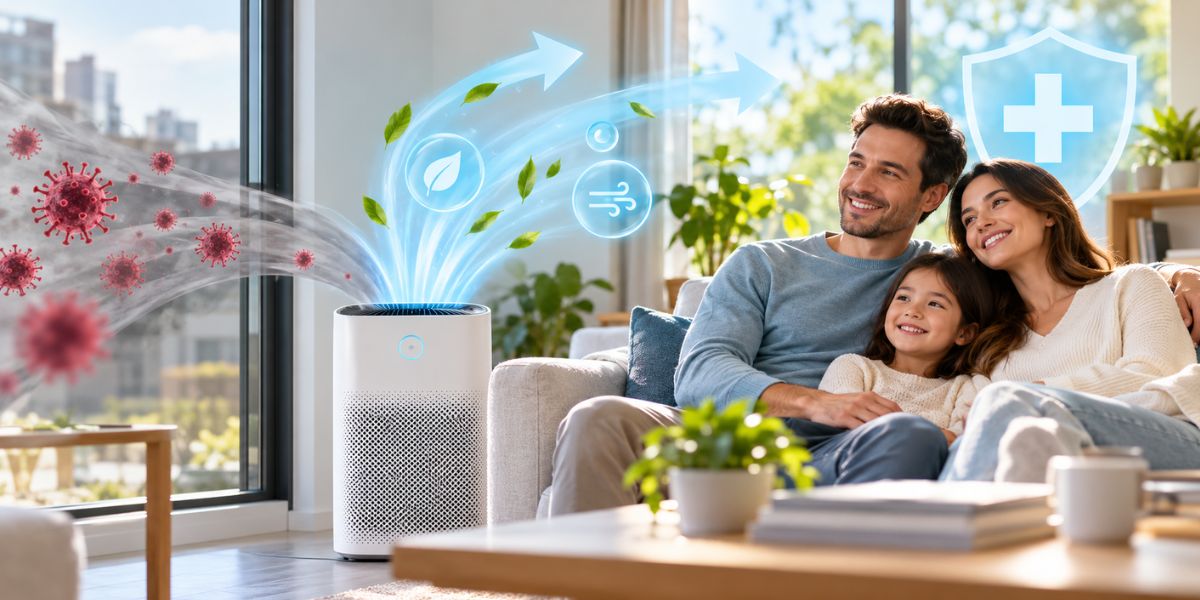
Influenza is one of the most common respiratory infections affecting people around the world. Although many individuals focus on handwashing, vaccination, and avoiding direct contact with sick people, another important factor is often overlooked: the quality of the air inside our homes, offices, schools, and other enclosed spaces.
Indoor environments can influence how respiratory viruses spread. When an infected person breathes, talks, coughs, or sneezes, respiratory particles containing influenza viruses may enter the surrounding air.
In poorly ventilated rooms, some of these particles can remain airborne and accumulate, increasing the potential for others to inhale them.
This is why maintaining cleaner indoor air has become an important part of modern respiratory health protection.
Proper ventilation, effective air filtration, suitable humidity levels, and good hygiene practices can help create healthier indoor environments while reducing the risk of influenza transmission.
However, clean air alone cannot guarantee protection against the flu. The most effective prevention strategy combines indoor air improvements with influenza vaccination and other appropriate precautions.
What Is the Relationship Between Indoor Air Quality and Influenza?
Influenza is caused by influenza viruses that primarily infect the respiratory system.
These viruses spread mainly through respiratory particles released by infected individuals. Transmission can occur when another person inhales infectious particles or when respiratory particles reach the nose, mouth, or eyes.
The indoor environment can affect how these particles move, accumulate, and eventually leave the air.
In a small, crowded, poorly ventilated room, infectious respiratory particles may remain suspended in the air longer because there is insufficient fresh-air exchange or filtration.
By contrast, a well-ventilated indoor environment can dilute airborne contaminants by replacing contaminated indoor air with outdoor air.
Effective air filtration can also remove airborne particles from recirculated indoor air.
Better indoor air quality does not directly kill every influenza virus, but it can reduce the concentration of potentially infectious particles that people breathe.
This makes ventilation and filtration valuable components of respiratory infection prevention.
Why Poor Indoor Ventilation Can Increase Influenza Transmission
Ventilation refers to the process of bringing outdoor air into an indoor space and removing or diluting indoor air contaminants.
When ventilation is inadequate, particles released through breathing, speaking, coughing, and sneezing may accumulate.
The risk of respiratory virus transmission depends on several factors, including room size, occupancy, duration of exposure, air movement, filtration, and whether an infected person is present.
For example, spending several hours in a crowded meeting room with limited ventilation may create more opportunities for exposure than spending a short period in a spacious, well-ventilated area.
Poor ventilation does not create influenza viruses on its own. An infectious source must be present for influenza transmission to occur.
Nevertheless, improving airflow can help reduce the likelihood that respiratory particles will accumulate indoors.
7 Important Ways Clean Indoor Air Can Help Prevent Influenza
1. Reducing the Concentration of Airborne Respiratory Particles
One of the most important benefits of clean indoor air is its ability to reduce airborne contaminants.
When someone infected with influenza releases respiratory particles, some may remain suspended in the air.
Ventilation introduces outdoor air that can dilute these particles, while filtration systems can capture particles circulating through indoor air.
Reducing the concentration of infectious particles may lower the amount that other occupants inhale.
Although ventilation cannot eliminate every exposure, it can provide an additional layer of protection in shared indoor spaces.
2. Improving Air Circulation in Enclosed Rooms
Air movement helps distribute and remove airborne contaminants when ventilation systems are appropriately designed.
Rooms with stagnant air and inadequate fresh-air exchange may allow respiratory particles to accumulate.
Opening windows, using mechanical ventilation, or operating appropriate exhaust systems can help improve airflow.
However, air circulation alone is not the same as ventilation.
For example, a standard fan that only recirculates indoor air without filtration or fresh-air exchange may redistribute contaminated air instead of removing it.
Fans should therefore be positioned thoughtfully and should not direct air from an infected person toward other occupants.
3. Supporting Healthier Homes and Family Environments
Homes are places where family members spend substantial amounts of time together.
When one person develops influenza, shared bedrooms, living rooms, and dining areas can become locations where household transmission occurs.
Maintaining adequate ventilation can help reduce shared airborne exposure.
Practical steps include opening windows when outdoor conditions permit, using appropriate air purifiers, and improving airflow in frequently occupied rooms.
When someone in the household is sick, additional precautions such as limiting close contact, wearing a well-fitting mask when sharing spaces, and using separate rooms where practical can further reduce risk.
4. Reducing Respiratory Exposure in Offices and Workplaces
Modern workplaces often involve shared indoor environments, including meeting rooms, offices, elevators, and break areas.
Employees may spend several hours together, increasing opportunities for respiratory virus exposure.
Employers can support healthier indoor air by maintaining HVAC systems, ensuring adequate outdoor air supply, and upgrading filtration when compatible with their equipment.
Portable HEPA air cleaners may also help in rooms where ventilation is insufficient.
These measures are especially relevant during periods of increased influenza activity.
However, improving air quality should complement workplace policies that encourage employees to remain home when they are ill.
5. Helping Protect Children in Schools and Classrooms
Schools and childcare facilities bring many children and educators into shared indoor spaces.
Respiratory viruses can spread readily in these environments because of close contact and extended periods indoors.
Improving classroom ventilation and filtration can reduce exposure to airborne respiratory particles.
Schools may consider regular ventilation system maintenance, effective air filtration, and appropriately sized portable air cleaners.
These measures can support broader infection prevention strategies, including vaccination, respiratory hygiene, and keeping sick children at home.
6. Supporting Protection for Older Adults and Vulnerable Individuals
Older adults and people with certain chronic medical conditions have a higher risk of developing serious complications from influenza.
For these individuals, reducing exposure to respiratory viruses is particularly important.
Cleaner indoor air can be one element of a protective environment, especially in homes, assisted living facilities, and healthcare settings.
Improved ventilation and filtration should be combined with recommended influenza vaccination, appropriate infection prevention practices, and medical guidance.
7. Improving Overall Indoor Environmental Quality
The benefits of ventilation and filtration extend beyond influenza prevention.
Depending on the system, cleaner indoor air can also reduce exposure to dust, pollen, some airborne allergens, and particulate pollution.
Ventilation may help remove certain indoor-generated pollutants, while appropriate filtration captures particles.
These improvements can contribute to a more comfortable indoor environment.
However, not every air-cleaning device removes gases, odors, or biological contaminants equally well. Products should be selected based on their verified performance and the specific problem being addressed.
How to Improve Indoor Air Quality to Reduce Influenza Risk
Understanding the importance of clean air is only the first step. The next is applying practical measures that help reduce airborne exposure.
1. Open Windows to Increase Fresh Air
Opening windows is one of the simplest ways to improve natural ventilation when outdoor air quality and weather conditions are suitable.
Allowing outdoor air to enter a room can help dilute airborne contaminants.
Opening windows on opposite sides of a room may create cross-ventilation and improve airflow.
However, windows should remain closed when outdoor conditions are hazardous, such as during severe wildfire smoke, heavy air pollution, or other unsafe environmental conditions.
In these situations, properly filtered mechanical ventilation or portable air cleaners may be more appropriate.
2. Maintain Heating, Ventilation, and Air Conditioning Systems
HVAC systems can help manage indoor air quality through outdoor-air ventilation and filtration.
Regular maintenance helps ensure that systems operate as intended.
Where equipment is compatible, upgrading to filters rated MERV 13 or higher may improve particle removal.
Not every ventilation system can accommodate higher-efficiency filters, so building owners should confirm compatibility before making changes.
It is important to remember that an air conditioner does not automatically provide adequate fresh-air ventilation. Many units primarily recirculate indoor air.
3. Use a Portable HEPA Air Purifier
Portable air purifiers equipped with high-efficiency particulate air (HEPA) filters can remove airborne particles from indoor air.
A true HEPA filter is designed to capture at least 99.97% of particles at a specified test size of 0.3 micrometers under standard testing conditions.
Although individual viruses are smaller than this, infectious respiratory particles vary in size, and HEPA filtration can capture virus-containing airborne particles.
When selecting an air purifier, consider the room size and the product's Clean Air Delivery Rate (CADR).
An undersized device may provide insufficient air cleaning for a large or heavily occupied room.
Choose equipment with verified filtration performance, and avoid devices that intentionally generate ozone.
4. Pay Attention to Indoor Humidity
Humidity can influence respiratory comfort and the behavior of airborne particles.
Extremely dry air may irritate the nose and throat, while excessively humid environments can encourage mold and dust mite growth.
For many indoor environments, maintaining relative humidity around 30% to 50% can help balance comfort and moisture control.
However, humidity control should not be treated as a proven stand-alone method of preventing influenza.
Research into the relationship between humidity, influenza virus survival, and transmission is complex, and outcomes depend on environmental conditions.
Ventilation, filtration, and vaccination remain more established preventive measures.
5. Reduce Indoor Sources of Air Pollution
Maintaining clean indoor air also means controlling pollutants generated inside buildings.
Tobacco smoke, burning candles, cooking emissions, and certain household products can introduce particles or gases into the air.
Avoid smoking indoors, use kitchen exhaust ventilation when available, and minimize unnecessary combustion sources.
Reducing these pollutants improves overall indoor air quality, although removing smoke or odors does not by itself prevent influenza transmission.
6. Avoid Overcrowding When Respiratory Illness Is Spreading
Crowded indoor environments can increase opportunities for respiratory virus transmission.
Reducing occupancy or shortening time spent in crowded spaces may help limit exposure, particularly when ventilation is inadequate.
During influenza season, consider using larger meeting rooms, improving airflow, or moving appropriate activities outdoors when conditions permit.
These measures are especially valuable when vulnerable individuals are present.
7. Combine Clean Indoor Air With Appropriate Mask Use
Even with good ventilation, close-range exposure to infectious respiratory particles can still occur.
A well-fitting mask or respirator may provide additional protection in higher-risk indoor environments.
For example, masks may be useful when caring for someone with influenza, visiting crowded healthcare settings, or sharing indoor spaces during periods of increased respiratory illness.
High-filtration respirators, such as properly fitted N95 models, generally provide stronger wearer protection against airborne particles than loose-fitting masks.
People looking for health protection information and everyday wellness resources can explore face mask and respiratory protection resources at Health Gear Now.
Combining effective indoor air management with appropriate mask use can help reduce exposure through complementary preventive measures.
Does Air Conditioning Prevent Influenza?
Air conditioning can improve indoor comfort, but it does not necessarily prevent influenza transmission.
Many household air conditioners work by cooling and recirculating indoor air without bringing in significant amounts of fresh outdoor air.
Consequently, a cool room is not automatically a well-ventilated room.
An air-conditioned space may benefit from additional ventilation or appropriately sized air filtration equipment.
Modern HVAC systems that provide outdoor-air exchange and effective filtration can help reduce airborne particle concentrations when properly maintained.
The important factor is not simply the room temperature, but how effectively the indoor air is refreshed and cleaned.
Can an Air Purifier Remove Influenza Viruses From Indoor Air?
A properly sized air purifier with an effective particle filter can capture airborne particles that may contain influenza viruses.
However, the effectiveness of an air purifier depends on several factors, including its filtration efficiency, airflow rate, room size, and placement.
The United States Environmental Protection Agency (EPA) recommends choosing portable air cleaners with an appropriate Clean Air Delivery Rate for the intended room.
Air purification can supplement ventilation but cannot guarantee an influenza-free indoor environment.
For best results, keep the device operating according to the manufacturer's recommendations and replace filters when necessary.
How Much Ventilation Is Needed for Healthier Indoor Air?
The amount of ventilation needed varies according to building size, occupancy, activity, and local building requirements.
As a general respiratory infection prevention target, the CDC recommends aiming for five or more air changes per hour of clean air in indoor spaces when feasible.
This target may be achieved through a combination of outdoor-air ventilation, filtration, and other appropriate air-cleaning technologies.
However, achieving five clean-air changes per hour does not guarantee that influenza transmission will be prevented.
Buildings should also comply with applicable ventilation standards, and complex systems may require evaluation by qualified professionals.
Frequently Asked Questions About Indoor Air and Influenza
Can you catch influenza from the air in a room?
Yes. Influenza can spread through infectious respiratory particles released by an infected person. Some particles can remain airborne, particularly in poorly ventilated indoor spaces.
Does opening windows help prevent the flu?
Opening windows can introduce fresh outdoor air and dilute potentially infectious respiratory particles. It can reduce airborne exposure, although it does not eliminate the possibility of infection.
Can influenza spread in an air-conditioned room?
Yes. Influenza can spread in air-conditioned environments, particularly when ventilation is inadequate. Cooling the air does not automatically remove infectious respiratory particles.
Do HEPA air purifiers help protect against influenza?
HEPA air purifiers can capture airborne particles that may contain influenza viruses. Their effectiveness depends on proper sizing, airflow, filtration, placement, and consistent operation.
Does sunlight entering a room kill influenza viruses?
Sunlight may contribute to the inactivation of some microorganisms under certain conditions, but ordinary sunlight entering through a window is not a reliable influenza prevention strategy. Appropriate ventilation and filtration are more dependable ways to reduce airborne exposure.
Can influenza spread in a room after a sick person leaves?
Potentially, yes. Some infectious respiratory particles may remain airborne for a period after an infected person leaves. The duration depends on ventilation, filtration, particle behavior, and environmental conditions. Improving air cleaning can help reduce the concentration of remaining particles.
Is a fan enough to prevent influenza transmission?
No. A standard fan primarily moves air around a room. Unless it supports effective ventilation or filtration, it may not remove infectious particles. Fans should also be positioned to avoid directing potentially contaminated air toward other people.
Is clean indoor air more important than wearing a face mask?
Both measures serve different purposes. Ventilation and filtration reduce the concentration of airborne particles within a space, while appropriate masks can reduce respiratory emissions and inhalation exposure. Using them together may provide more protection than relying on either measure alone.
What is the best way to keep a bedroom safe when someone has influenza?
When practical, the sick person should stay in a separate, well-ventilated room. Increasing fresh-air ventilation, using a properly sized HEPA air purifier, limiting close contact, and wearing well-fitting masks when sharing indoor spaces can help reduce exposure.
Can clean indoor air completely prevent influenza?
No. Cleaner indoor air can lower the risk of airborne transmission, but influenza can still spread through close contact and other exposure pathways. Vaccination, staying home when sick, respiratory hygiene, and appropriate preventive measures remain essential.
Conclusion: Clean Indoor Air Is an Important Part of Influenza Prevention
Maintaining clean indoor air is an important yet sometimes overlooked part of protecting respiratory health.
Influenza can spread through respiratory particles released into shared indoor environments. In crowded or poorly ventilated spaces, these particles may accumulate and increase opportunities for infection.
Improving ventilation, using appropriate air filtration, maintaining HVAC systems, and managing indoor environmental conditions can help reduce airborne exposure.
However, cleaner indoor air should be viewed as one part of a comprehensive influenza prevention strategy.
Annual influenza vaccination, staying home when sick, maintaining good respiratory hygiene, and using a well-fitting mask when appropriate provide additional protection.
A healthier indoor environment begins with better airflow, effective filtration, and informed daily habits. By taking practical steps to improve indoor air quality, individuals and families can reduce avoidable respiratory exposures and create more comfortable spaces for everyday life.
Medical and Scientific References
- CDC — Taking Steps for Cleaner Air for Respiratory Virus Prevention
- CDC/NIOSH — Ventilation Mitigation Strategies
- EPA — Guide to Air Cleaners in the Home
- CDC — Preventing Respiratory Illnesses
Discover face mask and respiratory protection resources from Health Gear Now.
Explore the collection →Related reading: The Importance of Face Masks in Modern Life · Can Influenza Cause Lower Back Pain?